
Dental care3 min read
Root canal treatment: what actually happens, step by step
Is a root canal painful? How many sittings does it take? A plain-language guide to root canal treatment (RCT) and why a crown usually follows.
Read articleDental care
Saving a damaged or infected tooth instead of removing it.
When decay or infection reaches the inside of a tooth, a root canal cleans and seals it so the natural tooth can stay. It is usually followed by a cap (crown) to protect it.
Inside every tooth is a soft core called the pulp, which holds the nerve and blood supply. When deep decay, a crack or an old filling lets bacteria reach it, the pulp becomes inflamed or infected. Left alone, the infection can spread to the bone around the root and cause an abscess — and the tooth may eventually be lost.
Root canal treatment removes the infected pulp, cleans and disinfects the canals inside the roots, and then fills and seals them. It is done under local anaesthesia, so for most people it feels much like having a filling. Depending on the tooth and the infection, it may be completed in one sitting or spread over two or three.
Because a treated tooth becomes more brittle, it is usually protected afterwards with a crown (cap), especially on back teeth that take heavy chewing. With a well-fitting crown and good oral hygiene, a root-canal-treated tooth can last for many years.
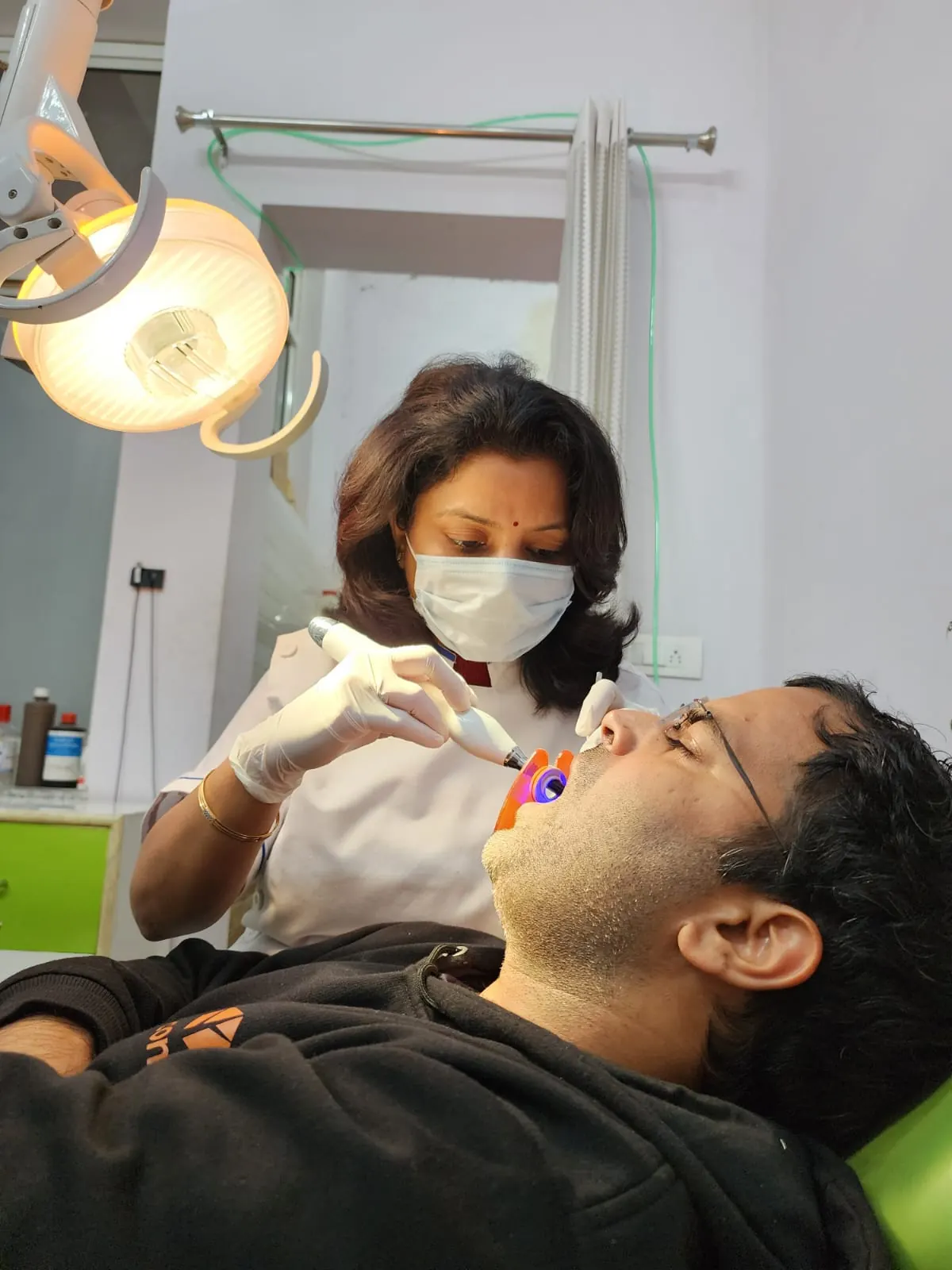
Photographed at the clinic.
Not sure if this is the right treatment? That’s what the consultation is for.
Dr. Jahanvi listens to your concern and examines you before anything is decided.
Options, number of sittings and what to expect are explained, so you can choose with full information.
Done at the clinic in Jhotwara, with your comfort kept in mind throughout.
Aftercare advice and review visits, so results are checked and maintained.
With Dr. Jahanvi Tyagi, dental surgeon & clinical cosmetologist · Open every day, 10:30 AM – 8:00 PM
Is a root canal painful? How many sittings does it take? A plain-language guide to root canal treatment (RCT) and why a crown usually follows.
Read article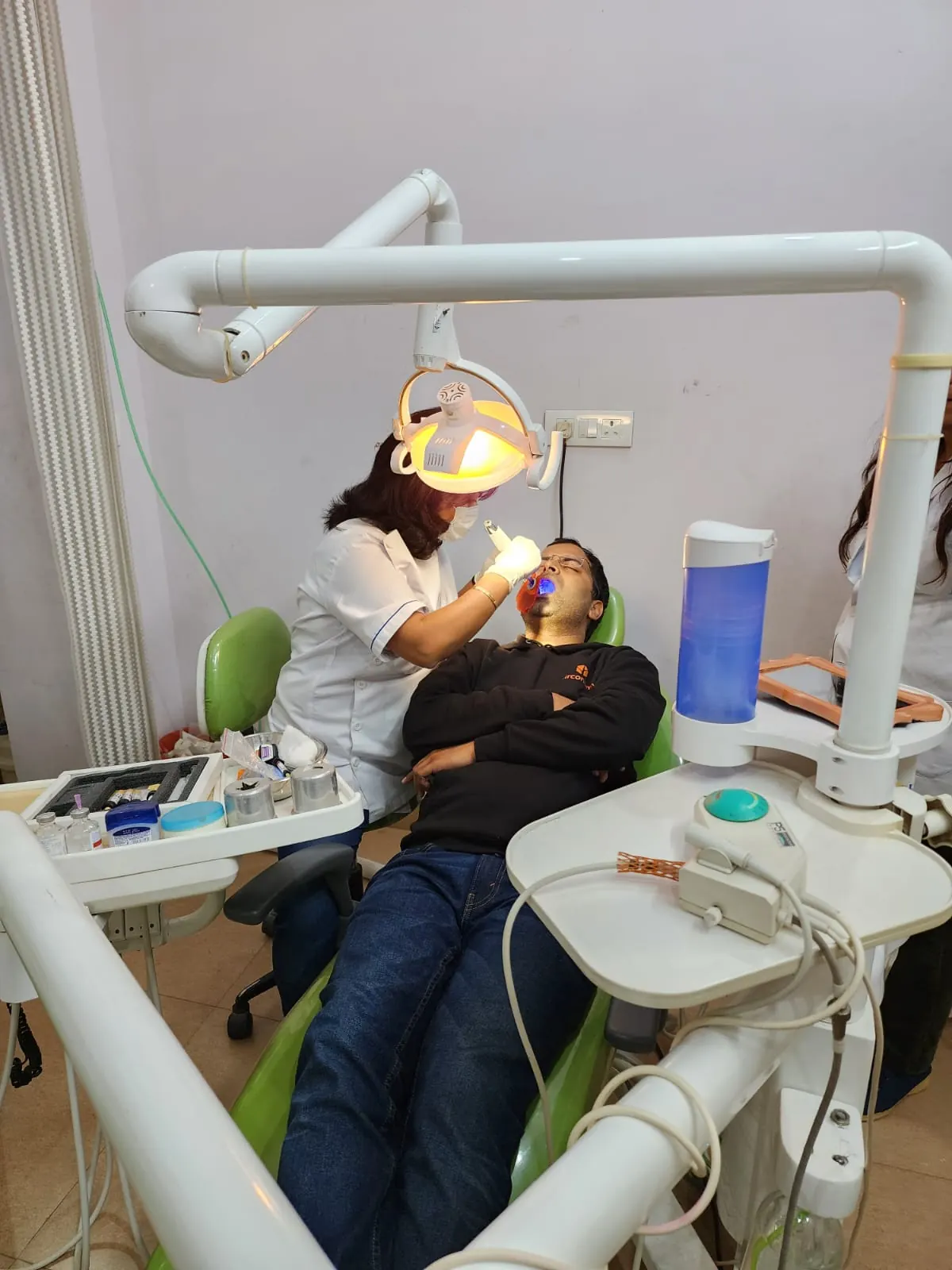
A sharp twinge with cold water or sweets? Learn the common causes of tooth sensitivity, what helps at home, and the signs that need a dentist.
Read article